Skip to content
Free Shipping above ₹499 | All India Delivery

Varigated Monstera Live Indoor Plant | 8.5cm Pot

Original price Rs. 2,000.00 - Original price Rs. 2,000.00
Original price
Rs. 2,000.00
Rs. 2,000.00 - Rs. 2,000.00
Current price Rs. 2,000.00
SKU MON-VAR-085
On a plant collector's wish list for good reason — the Varigated Monstera produces broad, elongated leaves where no two look alike, with one leaf showing solid glossy dark green and another splashed with bright green and white in a pattern that genuinely stops people in their tracks. What makes this variety demand extra attention is that the white portions of the leaves contain no chlorophyll at all, so the plant works harder to photosynthesize and needs brighter conditions than any plain green Monstera you may already own. This compact starter comes in an 8.5cm pot — perfectly sized for a well-lit desk or windowsill while it establishes itself. It's the kind of plant you show off before you even find it a permanent home.
Watering

Water when the top layer of soil is dry.

Light

Varigated Monstera needs bright indirect light — place it near an east or west-facing window where it receives gentle morning or late afternoon sun. Avoid low-light spots entirely, as the white leaf sections cannot photosynthesize and the plant depends on good ambient brightness to thrive.

Pet Friendliness

Keep out of pet reach — This plant and your furry friends cannot become the best buds.

Fertilizer

Feed occasionally with a balanced fertilizer during the growing season.

Also Known As: Swiss Cheese Plant, Variegated Monstera, Monstera Albo

Color may appear slightly different in person due to photographic lighting and monitor settings.

The varigated monstera sitting in front of you right now has already done something remarkable — one of its broad, elongated leaves is a deep, glossy solid green, while another is painted with bold splashes of bright green and white that look almost hand-marbled. That contrast, leaf to leaf, is exactly what makes this variety so sought after in Indian homes and collector circles alike.

About Variegated Monstera Deliciosa

Variegated Monstera deliciosa is a naturally occurring or tissue-cultured mutation of the iconic Swiss cheese plant, where portions of the leaf cells produce no chlorophyll, resulting in white or cream patches alongside the standard deep green. The two most well-known forms are Monstera albo variegata, which carries stark white variegation similar to what you see on this plant, and the Thai Constellation, which produces a creamier, speckled pattern. This compact starter already shows the characteristic half-moon variegation pattern — where a single leaf can be split dramatically between green and white — and because those white sections cannot contribute to photosynthesis, the plant is genuinely working harder than a plain green Monstera to sustain itself. As an epiphyte by nature, it develops aerial roots that help it anchor and climb in the wild, and that climbing instinct stays fully intact indoors.

Monstera Indoor Plant Benefits

Statement Foliage for Any Bright Corner

Few houseplants produce the kind of visual contrast this one does — a single stem can carry one leaf in solid gloss green and the next in a bright green-and-white pattern, so the plant looks different every time it pushes out new growth. For a well-lit living room corner, a home office near a window, or a shelfie setup that needs a centrepiece, this compact 8.5cm pot version is an ideal starting point before the plant grows into the showstopper it will eventually become.

Collector's Variety with Real Rarity Value

Variegated Monsteras gained a near-cult following globally — and for good reason. Because the variegation is genetic rather than painted on, every new leaf is a surprise: some carry heavy white sections, some show marbled streaking, and occasionally a leaf emerges almost entirely white. Owning one from an early stage means you get to watch that story unfold, which is a genuinely different experience from buying a mature plant.

A Meaningful Gift for Plant Enthusiasts

For someone who already owns houseplants and wants something they cannot easily find locally, this is one of the most thoughtful gifts you can give — especially at a housewarming or for a plant-obsessed friend's birthday. The compact starter size keeps it affordable without sacrificing the wow factor, and the striking two-tone leaf pattern means it looks impressive even in its early stage.

Bright Indirect Light: Getting the Conditions Right

Because the white portions of variegated leaves cannot absorb light, this plant needs brighter conditions than a standard Monstera — bright indirect light is the minimum, and a spot near a window with a couple of hours of gentle early morning or late afternoon sun is genuinely ideal. Avoid long stretches of harsh midday direct sun, as the lighter sections of the leaf are more prone to burning and browning than fully green foliage. If your home has a north-facing room with limited natural light, this is not the right spot — a west or east-facing window with good ambient brightness will keep the variegation vivid and the plant growing steadily.

Understanding Aerial Roots and Climbing Habit

Like all Monsteras, this is a climbing plant at heart — in its natural habitat it uses its aerial roots to ascend trees and reach higher light. Indoors, those aerial roots will begin to emerge from the nodes as the plant matures, and you can encourage upward growth by introducing a moss stick or coco coir pole, which the roots will grip and use as support. Keeping the plant compact on a desk is fine for now, but as it grows, giving it something to climb will result in larger, more dramatically variegated leaves over time.

Also Known As: Swiss Cheese Plant, Variegated Monstera, Monstera Albo
Why Chhajed Garden

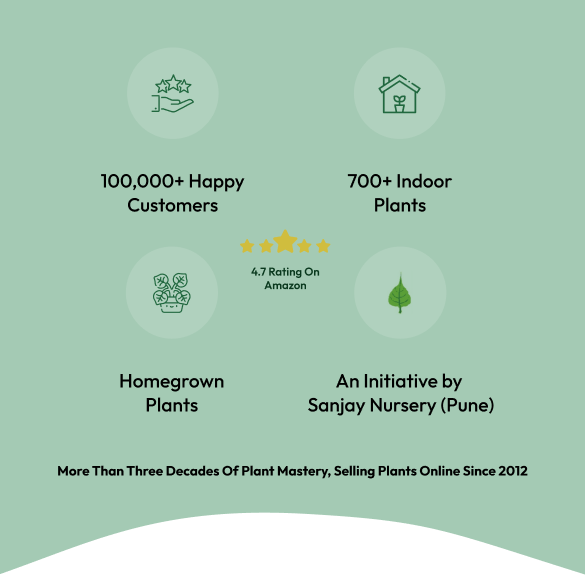
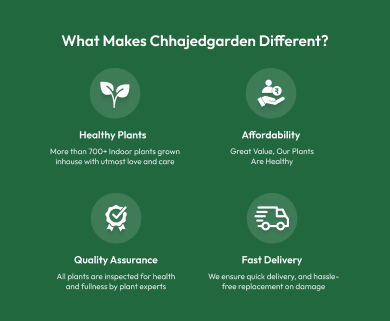
This plant has been grown in-house in cocopeat at Sanjay Nursery, where over 40 years of growing experience goes into every batch — so the roots you receive are healthy, well-nourished, and ready to establish quickly in your home. Every order comes with a 7-day replacement guarantee, because we stand behind what we grow.

When that next new leaf unfurls and you see the white sweep across it for the first time, you'll understand exactly why collectors obsess over this plant.

Frequently Asked Questions

Find answers to common questions

Yes — this plant is grown in-house in cocopeat, which keeps roots stable during transit, and every order comes with a 7-day replacement guarantee. Varigated Monsteras are increasingly ordered online across India as they are rarely available at local nurseries.

It needs bright indirect light — a spot near an east or west-facing window works well, with a couple of hours of gentle morning or late afternoon sun being beneficial. Avoid low-light rooms entirely, because the white portions of the leaves cannot photosynthesize and the plant needs that extra light to compensate.

Brown tips on this variety are most commonly caused by either insufficient light or salt buildup from tap water — letting your tap water sit uncovered for 24 hours before watering allows minerals to dissipate and helps prevent this. Check your light conditions first, since the non-green leaf sections are more sensitive to low-light stress than a plain Monstera would be.

Monstera albo variegata has stark, bright white variegation — often in large patches or half-moon sections — while Thai Constellation produces a creamier, constellation-like flecking across the leaf surface. The plant in this listing shows the white-and-bright-green pattern characteristic of the albo type.

Yellowing on a Varigated Monstera is most often a sign of overwatering — these are epiphytes with aerial roots that are sensitive to soggy soil, so always wait until the top quarter of the soil is dry before watering again. If watering is correct, check whether the plant has become rootbound, which can also cause yellowing as the roots run out of space.

Variegation can reduce if the plant is kept in consistently low light, as it may produce more chlorophyll-rich green tissue to compensate for poor photosynthesis conditions. Keeping it in bright indirect light is the most reliable way to maintain vivid white patterning on new leaves.

Use a well-draining mix that includes perlite and orchid bark alongside standard potting soil — this replicates the airy, fast-draining conditions the plant's aerial roots are adapted to. Waterlogged or heavy soil is the fastest way to cause root issues in this variety, so drainage is the priority.