
Skip to content
Free Shipping above ₹499 | All India Delivery

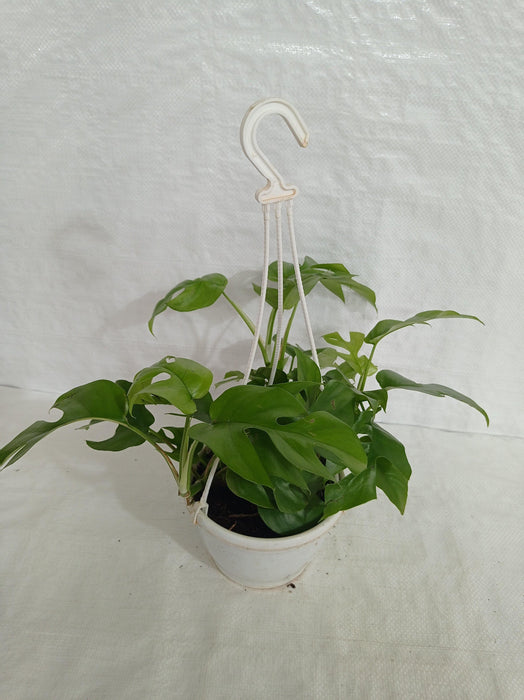
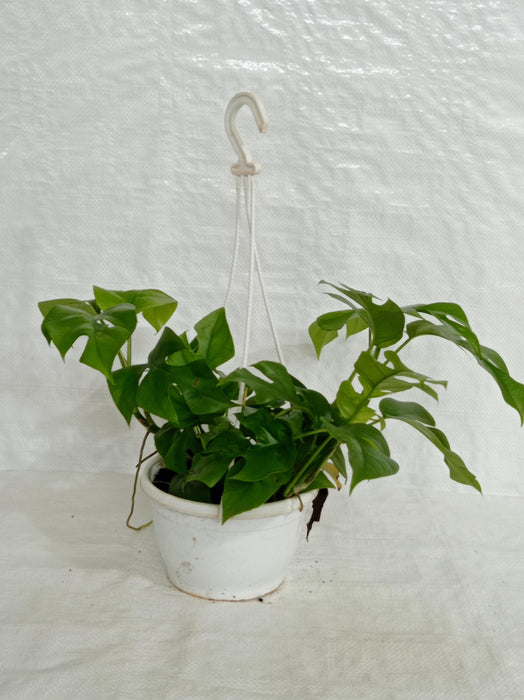
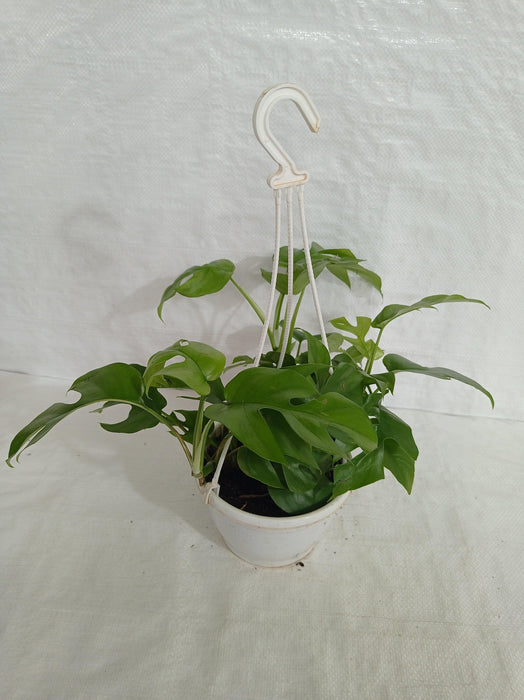
Monstera Minima Live Indoor Hanging Plant in 17cm Pot

Sold out
Original price Rs. 949.00 - Original price Rs. 949.00
Original price
Rs. 949.00
Rs. 949.00 - Rs. 949.00
Current price Rs. 949.00
SKU MDMN102
What if you could have the drama of a full-sized Monstera — those iconic split leaves, the glossy green, the tropical personality — in a form that actually fits an Indian home? That's exactly what the Monstera Deliciosa Minima does differently: unlike the standard Monstera Deliciosa, these dark green, fenestrated leaves appear when the plant is still young, so you're not waiting years for the signature look to arrive. It's a fast grower with sturdy, thick vines that can trail beautifully from a hanging basket or climb upward on a moss pole — this 17cm pot is well-established, dense, and ready to make a statement the day it arrives. Bathrooms and kitchens with east or west-facing windows are its sweet spot in Indian homes, where the natural humidity does half the work for you.
Watering

Water when the top layer of soil is dry.

Light

Bright indirect light near an east or west-facing window is ideal. Avoid direct harsh sun, which can scorch or yellow the leaves — some early morning sunlight is fine.

Pet Friendliness

Keep out of pet reach — This plant and your furry friends cannot become the best buds.

Fertilizer

Feed occasionally with a balanced fertilizer during the growing season.

Also Known As: Mini Monstera, Monstera Minima, Monstera Ginny, Philodendron Ginny, Rhaphidophora Tetrasperma


Every glossy, dark green leaf on this plant comes pre-equipped with characteristic splits and holes — the fenestrated leaves that monstera minima is celebrated for, appearing right from a young age rather than only after years of growth like its larger relative.

About Monstera Deliciosa Minima Hanging Plant

Native to Thailand and Malaysia, the Monstera Deliciosa Minima (botanically Rhaphidophora tetrasperma) belongs to the same Araceae family as the classic Monstera but is its own distinct genus entirely — which is why its fenestrated leaves show up so early and why the plant stays a manageable 1–2 metres indoors, even though it can climb to 5 metres in its native forest habitat. Its sturdy, thick vines develop aerial roots at each node, which can grip a moss pole or totem for upward growth or cascade freely from a hanging basket. This is one of the fastest-growing houseplants you can own — under good conditions, a small plant can fill a room in under 18 months. The dense, medium-sized foliage in this 17cm pot is already pushing outward in multiple directions, giving it an established, lush appearance from day one.

Climbing or Trailing Growth: Two Plants in One

Climbing or Trailing Growth: Style It Your Way

Most plants make you choose one spot and one look. The Monstera Deliciosa Minima gives you options: mount it on a moss pole and it shoots straight upward with a slender footprint — ideal for tight Indian apartment corners. Let it hang and the vines trail downward with glossy, split leaves fanning out beautifully. The aerial roots will even grip a wall hook if you want to train it across a surface behind a sofa or bed.

Fast-Growing Statement Plant

In Indian homes with good humidity and a bright east or west-facing window, this plant grows noticeably fast — new leaves appear frequently during the growing season, each one arriving pre-fenestrated and ready to impress. It fills a corner, transforms a bathroom shelf, or anchors a living room arrangement in a way that slow growers simply cannot. The vines are thick and self-supporting enough to hold their shape without constant fussing.

A Collector Piece That's Actually Affordable

The Minima was once considered a rare, expensive houseplant — early specimens sold for several thousand rupees for a small cutting. Today it offers that same collector-level visual appeal at a fraction of the price, making it one of the best-value statement plants available in India. The variegated forms (Albo, Aurea) are still rare and pricey, but the classic dark green variety delivers all the drama without the premium.

Soil and Potting Mix for Monstera Minima

The single biggest mistake with this plant is overwatering, and it almost always starts with the wrong soil. The Monstera Minima needs well-draining soil with plenty of aeration — a chunky mix with coconut coir or bark works far better than dense potting soil that holds moisture. Ensure the pot always has a drainage hole; roots sitting in waterlogged soil is this plant's main weakness. When repotting, choose a pot only slightly larger than the current one — too much extra space around the roots increases the risk of the soil staying wet too long.

Bright Indirect Light and Humidity Needs

Bright indirect light is the ideal — as much as possible without direct harsh sun hitting the leaves, which can cause yellowing or scorch marks. Some early morning or late afternoon sun is fine. The plant needs at least 50% humidity to thrive, which makes it naturally suited to bathrooms and kitchens with east or west-facing windows. In drier rooms — especially under air conditioning during Indian summers — the leaves may curl or develop brown tips; misting occasionally or placing a tray of water nearby helps. Too little light causes leggy stems and new leaves that arrive without the characteristic fenestrations, so placement near a window is genuinely important, not optional.

Also Known As: Mini Monstera, Monstera Minima, Monstera Ginny, Philodendron Ginny, Rhaphidophora Tetrasperma

Color may appear slightly different in person due to photographic lighting and monitor settings.

Why Chhajed Garden

This Monstera Minima is grown in-house at Sanjay Nursery, nurtured in cocopeat for strong, healthy roots — a practice refined over 40+ years of growing experience. Every plant comes with a 7-day replacement guarantee, so what arrives at your door is exactly what we'd be proud to grow ourselves.

There is something quietly satisfying about a plant that arrives already wearing its signature look — those split, glossy leaves ready from the start, no waiting required.

Frequently Asked Questions

Find answers to common questions

It is one of the fastest-growing houseplants you can own — under good conditions (warm, bright indirect light, proper watering), a small plant can go from just a few leaves to ceiling height in under 18 months. During the Indian monsoon season, when humidity is naturally high, growth can be especially vigorous.

Bright indirect light near an east or west-facing window is ideal — give it as much light as possible without direct harsh afternoon sun hitting the leaves. Too little light means the new leaves will grow without fenestrations (splits), which defeats the whole point of this plant.

Take a stem cutting just below a node (the bump on the stem where a leaf and aerial root emerge) and place it in water or moist cocopeat until roots develop. Each cutting needs at least one node and ideally one leaf to root successfully.

No — the plant is toxic to cats and dogs if ingested, which is worth keeping in mind if you have pets at home. Its hanging or climbing habit actually makes it easier to place out of reach compared to floor-standing plants.

Drooping or dropping leaves on a Monstera Minima is almost always a root issue — either overwatering has damaged the roots, or very occasionally the plant is underwatered. Check the soil immediately: if it's wet and has been wet for a while, ease off watering and check for root rot.

Both work well, but the plant grows fastest and produces the largest, most fenestrated leaves when its aerial roots can grip a moss pole or totem — this mimics how it climbs in its native Thai and Malaysian forests. As a hanging plant it trails beautifully, but the leaves tend to stay slightly smaller.

Given how fast this plant grows, expect to repot every 12–18 months — when roots start appearing from the drainage hole or circling the top of the soil. Move up only one pot size at a time to avoid excess soil staying wet and damaging the roots.