Skip to content
Free Shipping above ₹499 | All India Delivery

Monstera Broken Hanging Live Indoor Plant in 15cm Pot

Original price Rs. 349.00 - Original price Rs. 349.00
Original price
Rs. 349.00
Rs. 349.00 - Rs. 349.00
Current price Rs. 349.00
SKU MON-BRO-015
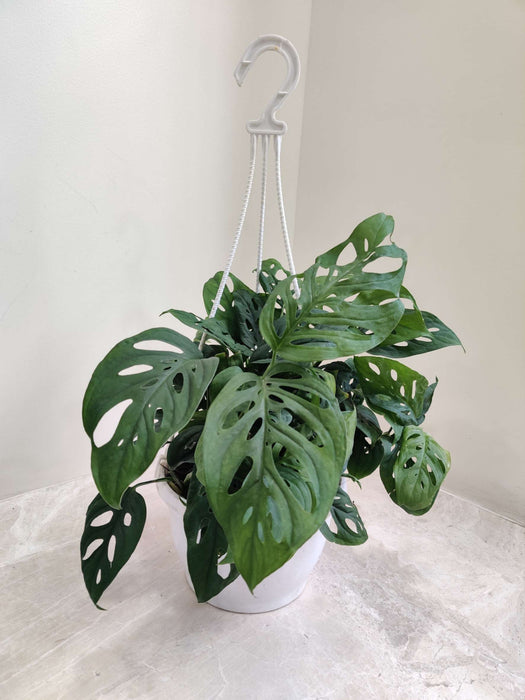
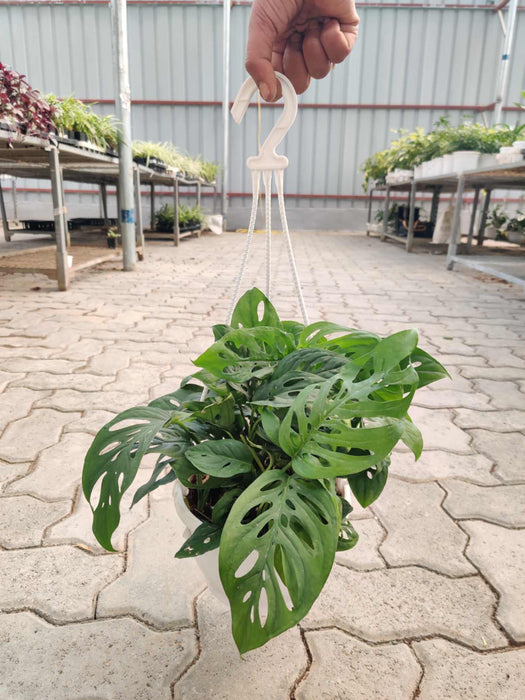
There's a reason Monstera 'Broken Hanging' stops people in their tracks — those large, glossy green leaves with deep fenestrations (the natural splits and holes) create a silhouette unlike any other plant you'll find on a shelf. What makes this variety distinct is the dramatic combination of heart-shaped leaf bases, prominent midribs, and a slightly textured surface that catches light beautifully from every angle. Supplied in a 15cm pot, it's already a statement piece ready for a living room corner, a bright hallway, or the kind of spot in your home that deserves something unforgettable. In Vastu Shastra, Monstera is associated with growth and forward momentum — and honestly, the luck just tags along for free.
Watering

Water when the top layer of soil is dry.

Light

Monstera 'Broken Hanging' thrives in bright, indirect light — a spot near a window with filtered sunlight is ideal. Avoid direct harsh afternoon sun, which can scorch the glossy leaves, but equally avoid deep shade, which will slow growth and reduce the characteristic fenestration in new leaves.

Pet Friendliness

Keep out of pet reach — This plant and your furry friends cannot become the best buds.

Fertilizer

Feed occasionally with a balanced fertilizer during the growing season.

Also Known As: Swiss Cheese Plant, Fruit Salad Plant, Mexican Breadfruit

Color may appear slightly different in person due to photographic lighting and monitor settings.

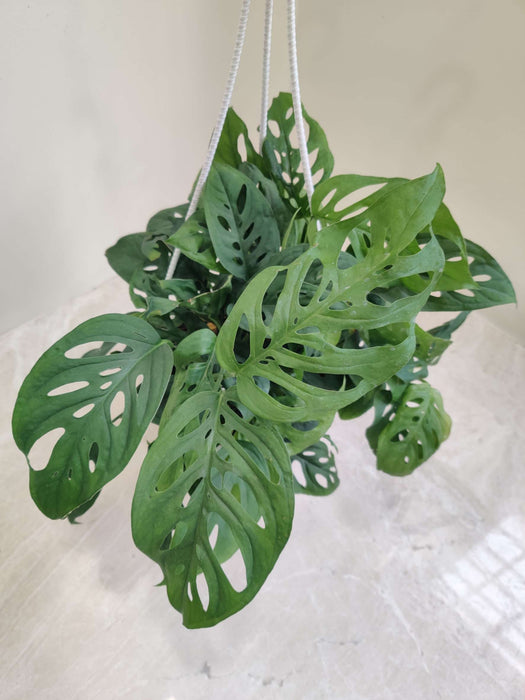
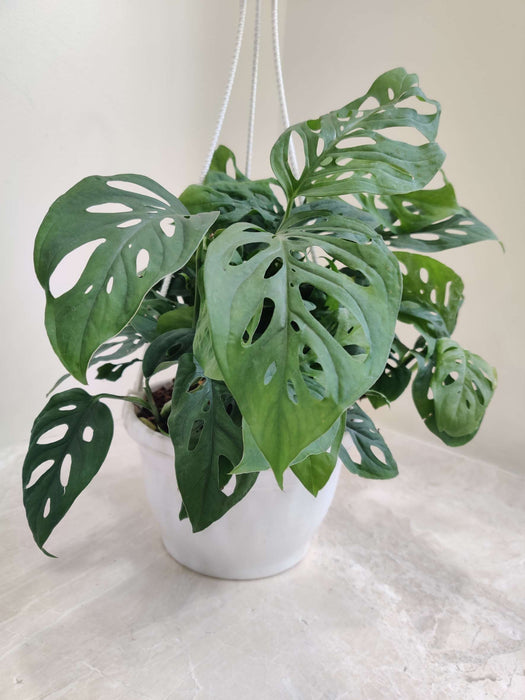
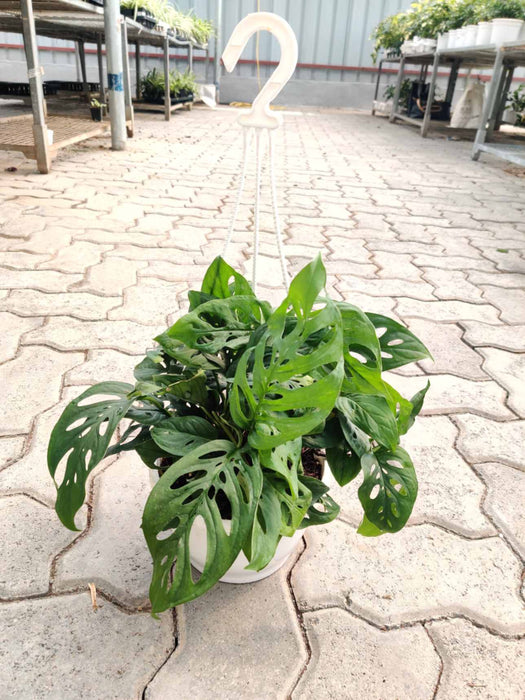
The monstera broken hanging plant arrives with large, glossy green leaves that fan outward dramatically — each one carrying multiple deep cuts and irregular holes that give the plant its signature sculptural look. The heart-shaped leaf bases and raised midribs aren't subtle details; they're exactly what you notice the moment you place this plant in a room.

About the Monstera Broken Hanging Plant

Monstera deliciosa is native to the tropical forests of Central America, where it grows by climbing upward toward the forest canopy — and the fenestrations (the holes and splits) in its leaves are thought to help wind pass through without snapping the leaf. In its 'Broken Hanging' form, the plant expresses those characteristic splits with particular boldness, producing leaves with multiple deep incisions that radiate outward from the prominent midrib. It is a genuinely easy plant to care for, tolerating a range of indoor light conditions while still producing that unmistakable foliage. Beyond its looks, it also contributes to better indoor air quality — a reason it has made its way into homes, offices, and hotel lobbies across India alike.

Monstera with Holes: Why Those Splits and Gaps Are a Feature, Not a Flaw

Statement Indoor Plant for Living Rooms

The combination of large, deeply fenestrated leaves and a slightly textured, vibrant green surface makes this one of the most visually commanding plants you can keep indoors. Place it in a bright living room corner or beside a large window, and it immediately becomes the room's focal point — the kind of plant guests ask about every single time. In a 15cm pot, it's already a substantial plant with room to grow considerably larger over the coming months.

Air Purifying Indoor Plant

Monstera is well documented for its ability to improve indoor air quality, absorbing airborne toxins and releasing oxygen as part of its natural process. In city apartments across India — where windows stay closed during summers or monsoon months — having a plant that actively works on the air around you is genuinely useful, not just decorative.

Symbol of Growth and Longevity

In both Vastu Shastra and Feng Shui traditions, Monstera is associated with growth, prosperity, and long life — its expansive, outward-reaching leaves are seen as an expression of abundance. That symbolism, combined with how striking it looks at a housewarming or Diwali gifting occasion, makes it a plant that carries real meaning alongside its visual weight.

Low Maintenance House Plant

Unlike many dramatic-looking plants that demand constant attention, this Monstera is genuinely forgiving — it adapts to indirect light, tolerates occasional missed waterings, and doesn't need high humidity to thrive in a typical Indian home. If you're building a plant collection but want something that looks after itself, this is the variety to start with.

How Monstera 'Broken Hanging' Stands Apart from Other Monstera Varieties

Within the broader Monstera family, varieties range from compact desktop plants to enormous single-leaf specimens. What distinguishes 'Broken Hanging' is the multi-fenestrated leaf structure — not just one or two cuts along the margin, but multiple deep incisions that create an almost lattice-like appearance across each leaf. Paired with the strong, raised veining and heart-shaped base, each leaf reads like it was carved rather than grown. It is a different visual experience from the rounder, less-divided leaves of younger or more compact monstera varieties.

Also Known As: Swiss Cheese Plant, Fruit Salad Plant, Mexican Breadfruit

Why Chhajed Garden

This plant is grown in-house in nutrient-rich cocopeat at Sanjay Nursery, drawing on over 40 years of growing experience — so the roots are healthy, the foliage is well-nourished, and what you see in the photograph is what arrives at your door. Every order comes with a 7-day replacement guarantee, because we'd rather sort a problem quickly than leave you with a plant you're not happy with.

Once those glossy, hole-punched leaves settle into your space, you'll wonder how your home ever looked complete without them.

Frequently Asked Questions

Find answers to common questions

Repot when roots begin circling the base of the pot or emerging from drainage holes — typically every 1–2 years. Always support the main stem firmly during the move, as Monstera stems can snap if the plant is top-heavy and lifted by the foliage alone.

Aerial roots are completely normal on Monstera and a sign of a healthy, actively growing plant. You can train them into the soil to improve moisture uptake, or guide them onto a moss pole to encourage the plant to climb and produce larger, more fenestrated leaves.

Yes — take a stem cutting that includes at least one node (the small bump where a leaf meets the stem) and one aerial root if possible, and place it in water or moist soil. Water propagation typically shows root development within 2–4 weeks; transferring to soil once roots are 3–5cm long gives the best results.

A broken stem with a node and aerial root attached can be propagated successfully — place it in water or soil and it will root and grow into a new plant. The original plant will also push new growth from a lower node as long as the root system remains intact.

Yellow leaves on a Monstera are most commonly caused by overwatering — allow the top layer of soil to dry out completely before watering again. If the yellowing is on older, lower leaves only, it's a natural part of the plant ageing and not a cause for concern.

Curling leaves usually indicate the plant is losing moisture faster than it can absorb it — this often happens in rooms with direct AC airflow or in very dry conditions during Indian summers. Move the plant away from direct air conditioning vents and ensure the soil is not bone dry.

Yes — the fenestrations (holes and splits) become more pronounced and numerous as the plant matures and receives adequate indirect light. Young leaves often emerge with fewer cuts; as the plant grows in good light conditions, each new leaf typically shows deeper and more complex fenestration than the last.